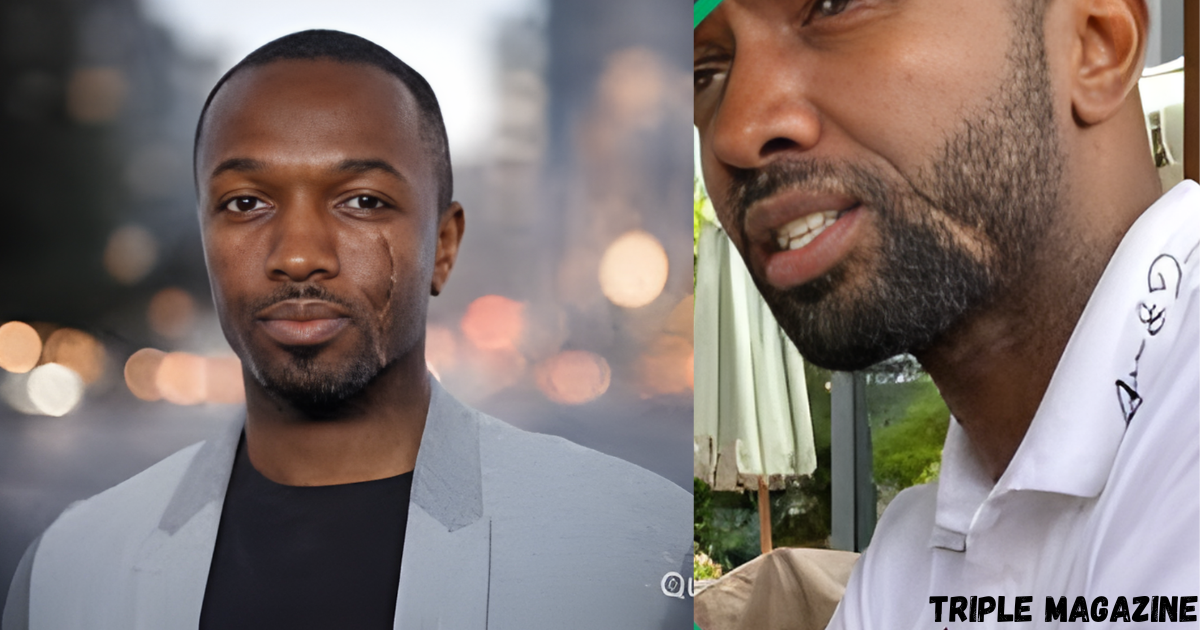
Jamie Hector Scar on his left smile line has become one of his most recognizable features, yet he has never publicly revealed how he got it. Many people identify the actor by this distinctive facial mark before recalling his name. In fact, the scar has become largely associated with his portrayal of ruthless characters in hit series like The Wire and Bosch.
From his early days with Brooklyn’s Tomorrow’s Future Theater Company in the early 1990s to landing his breakthrough role as Marlo Stanfield, Hector’s journey demonstrates how a mysterious facial mark can shape an acting career. This article explores the speculation surrounding the scar’s origin, how it influenced his casting in iconic roles, and the accomplished actor’s life beyond the screen.
The Mystery of Jamie Hector Scar
What the scar looks like
The prominent mark sits on Hector’s left cheek, specifically along his smile line, and extends upward toward his jawline. The scar appears to result from a sharp object, with many observers describing it as resembling a knife slash. Its visibility makes it one of the first features people notice about the actor.
Why Jamie Hector has never revealed its origin
Hector has consistently refused to discuss the scar’s origin throughout his career. Despite pressure from the media and curiosity from fans, he chose to keep quiet about what happened to his face. When asked about it, the actor simply states he does not like to talk about the scar and how he got it[31]. He has never answered questions about it publicly. While he has mentioned using the scar to produce emotions while acting, he prefers to keep the story behind the facial mark to himself.
Public speculation and theories
The lack of official explanation has sparked numerous debates and speculation. Reports suggest the scar resulted from an altercation during childhood, providing a narrative of resilience. Some sources claim it looks like what’s known in street terminology as a “buck 50,” referring to a specific type of facial cut. However, none of these theories have been confirmed by Hector himself. The mystery surrounding its origin has only intensified public interest over the years.
How the scar became part of his identity
What could have been a source of insecurity became a mark of survival and strength in Hector’s perspective. Many people identify him by his facial scar before remembering his name[52]. Casting directors and producers note that the scar adds depth and gravitas to characters. It allows him to portray roles with an intensity that resonates with audiences. The mark has significantly defined his persona and career trajectory in an industry that often emphasizes appearance. Rather than hindering his success, the scar has become his main trademark and continues to shape his onscreen presence.
Jamie Hector’s Background and Early Life
Growing up in Brooklyn with Haitian immigrant parents
Born on October 7, 1975, Hector entered the world as the youngest of seven children to Haitian immigrant parents. His mother, who worked as a nursing assistant, raised him primarily on her own after his parents separated soon after his birth. The family resided in Brooklyn neighborhoods including East Flatbush and Crown Heights, areas deeply rooted in Caribbean culture.
Flatbush, where Hector spent much of his childhood, is home to the largest community of Haitian Americans in the United States. At home, his mother spoke Creole and remained strongly attached to her native tongue, while Hector switched to English at school and with friends. His earliest memories centered on his mother’s vivid stories about her time in Haiti. This storytelling tradition sparked something fundamental in him, planting the seed for his desire to tell stories through the characters he would later portray.
Early interest in acting and theater
Hector’s path to acting began at 17 when a friend invited him to a community theater company called Tomorrow’s Future[62]. The people there asked what he could do, and he replied that he could dance. When he took the stage, everyone was blown away by his performance. That moment of recognition transitioned him into stage and performance work.
His Brooklyn roots showed in his speech patterns. He spoke incredibly fast, what the theater company members described as “Brooklyn 10×2”. Nobody could understand a word he was saying, yet they allowed him to stay and develop as an actor. People in his life throughout this journey provided encouragement, even if just a word like “don’t stop”. He had the drive and really wanted success, combining prayer with determination. One thing led to another as he started getting parts onstage, and audiences wanted to see his work.
Education at Lee Strasberg Theater Institute
After developing his skills with Tomorrow’s Future Theater Company, Hector enrolled at the Lee Strasberg Theater and Film Institute in New York City for two years. He also studied at Weist-Barron-Ryan Acting school when he was about 21. The formal training at these institutions refined the raw talent he had cultivated through community theater performances.
Also Read: Aliza Barber
How the Scar Shaped His Acting Career
Landing the role of Marlo Stanfield in The Wire
Hector’s career trajectory shifted when he joined The Wire in its third season as the ruthless drug kingpin Marlo Stanfield. Initially cast as a recurring guest star, his performance earned him a spot in the starring cast from the fourth season onwards. The role required minimal dialog, with his first line being “Do it or don’t. I’ve got places to be”. This economy of words matched the character’s cold efficiency.
The portrayal resonated deeply with audiences and critics alike. In 2016, Rolling Stone ranked him #2 of their ’40 Greatest TV Villains of All Time’. Hector created an extensive backstory for Marlo, filling two yellow construction pads with details about his upbringing and psychology. This preparation brought authenticity to a character who wasted nothing, not even words.
Playing Detective Jerry Edgar in Bosch
After The Wire concluded, Hector transitioned to playing Detective Jerry Edgar in Amazon’s Bosch starting in 2014. He starred opposite Titus Welliver across the series’ seven-season run. The role demonstrated his range, moving from villain to law enforcement. Hector prepared by doing ride-alongs with police. In the show, his character’s facial scars are explained as resulting from a past shooting while undercover.
The scar’s impact on character depth
The facial mark often adds depth to the characters Hector portrays. It provides visual storytelling that enhances the authenticity of tough, street-hardened roles. His appearance and acting talents combine to create memorable performances.
Other notable roles that utilized his appearance
His filmography includes Benjamin ‘Knox’ Washington in Heroes, Lincoln Deneuf in Max Payne, and a Black Panther in Night Catches Us. In 2022, he portrayed Officer Sean Suiter in We Own This City.
Why casting directors see him as perfect for tough characters
Hector was often typecast as a villain after The Wire, something that happened before the show too. African American actors frequently receive such offers. However, he remained philosophical: “I’d rather be pigeonholed than no holed. At least I was working”. The Wire changed industry perceptions, forcing recognition that Black actors “really can act and should be allowed to play different roles”.
Jamie Hector Beyond the Screen
Marriage to Jennifer Amelia and family life
Beyond his television work, Hector maintains a private family life with his wife, Jennifer Amelia, a wedding planner and event designer who founded Jennifer Amelia Events, LLC. The couple celebrates their wedding anniversary every August 22. They share two children: a daughter born in 2009 and a son born in 2016. The family resides in their Brooklyn home, keeping their personal life largely away from public scrutiny.
Celebrating his Haitian heritage
Hector’s connection to his roots extends through various cultural initiatives. He helped raise money for survivors of the 2010 Haiti earthquake and received recognition from the Haitian Roundtable during their Independence celebration. In May 2024, he partnered with Scholastic to create “Our Community: Haitian Heritage,” a collection of books celebrating Haitian culture and history.
Founding Moving Mountains for Brooklyn youth
In 2007, Hector founded Moving Mountains, Inc., a nonprofit theater organization providing year-round classes in drama, dance, vocal performance, and film. The Crown Heights-based program serves approximately 250 children annually, ages six through 24. All classes remain free of charge. Many former students now work professionally in television, film, and stage productions.
Published works and community initiatives
Hector co-wrote the children’s book series “Chloé Wonders” with Alaine Roberson, releasing it in 2022. His daughter inspired the collection, which reflects his commitment to youth literacy and cultural representation.
Conclusion
Jamie Hector Scar remains one of Hollywood’s most intriguing mysteries, yet its origin matters less than what it represents. The mark that could have limited his opportunities instead became his signature, opening doors to iconic roles like Marlo Stanfield and Detective Jerry Edgar. Beyond the screen, Hector demonstrates equal depth through his Haitian heritage advocacy and Moving Mountains nonprofit. Ultimately, his career proves that authenticity transcends conventional Hollywood standards.